
IP Class Finder
Instantly identify the class of any IPv4 address - Class A (1–126), B (128–191), C (192–223), D (Multicast), or E (Reserved). Also identifies private RFC 1918 ranges, loopback, link-local APIPA, CGNAT (used by Jio and other ISPs), and other special-use designations.
Hero, guides, and sidebar links below work without JavaScript. The interactive checker needs JavaScript enabled in your browser.
IPv4 Address Classes Explained
IPv4 addresses were originally divided into five classes (A through E) based on the value of the first octet. This classful addressing system was the foundation of IP networking from the 1980s until CIDR (Classless Inter-Domain Routing) replaced it in 1993. Understanding IP classes remains important for network certification exams, understanding why certain private IP ranges exist, and interpreting legacy network documentation.
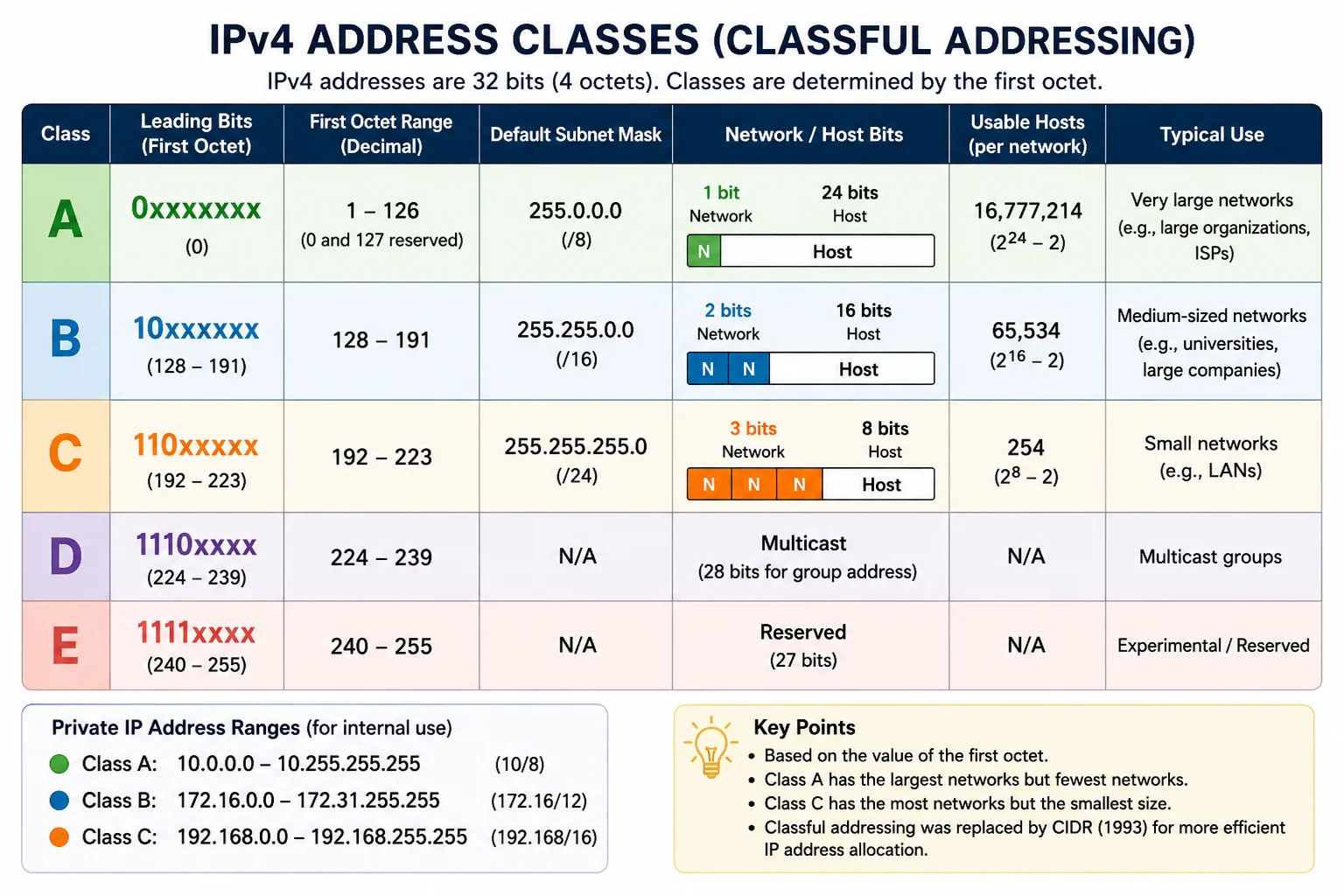
IPv4 address classes were defined by the leading bits of the first octet - from Class A's massive 16 million host networks to Class C's 254-host networks
Complete IP Address Class Reference
| Class | First Octet Range | Leading Bits | Default Mask | Networks | Hosts/Network | Private Range |
|---|---|---|---|---|---|---|
| A | 1–126 | 0xxxxxxx | 255.0.0.0 (/8) | 128 | 16,777,214 | 10.0.0.0/8 |
| B | 128–191 | 10xxxxxx | 255.255.0.0 (/16) | 16,384 | 65,534 | 172.16.0.0/12 |
| C | 192–223 | 110xxxxx | 255.255.255.0 (/24) | 2,097,152 | 254 | 192.168.0.0/16 |
| D | 224–239 | 1110xxxx | N/A (Multicast) | N/A | N/A | N/A |
| E | 240–255 | 11110xxx | N/A (Reserved) | N/A | N/A | N/A |
Note: 127.x.x.x is technically within the Class A range but is entirely reserved for loopback addresses. 0.x.x.x is reserved for "this network." So Class A effectively starts at 1.0.0.0.
Special-Use Ranges That Override Class
Certain IP ranges have special purposes that override their class designation:
| Range | CIDR | Purpose |
|---|---|---|
| 10.0.0.0 – 10.255.255.255 | /8 | RFC 1918 Private (Class A range) |
| 127.0.0.0 – 127.255.255.255 | /8 | Loopback - 127.0.0.1 is localhost |
| 169.254.0.0 – 169.254.255.255 | /16 | APIPA - auto-assigned when DHCP fails; also AWS metadata 169.254.169.254 |
| 172.16.0.0 – 172.31.255.255 | /12 | RFC 1918 Private (Class B range) |
| 192.168.0.0 – 192.168.255.255 | /16 | RFC 1918 Private (Class C range) |
| 100.64.0.0 – 100.127.255.255 | /10 | CGNAT (RFC 6598) - used by Indian ISPs including Jio for shared public IP addressing |
| 224.0.0.0 – 239.255.255.255 | /4 | Class D Multicast - IPTV, routing protocols (OSPF uses 224.0.0.5/6, RIP uses 224.0.0.9) |
Frequently Asked Questions
What are the five IPv4 address classes?
Class A (1–126 first octet, /8 default mask, 16 million hosts/network), Class B (128–191, /16 mask, 65,534 hosts), Class C (192–223, /24 mask, 254 hosts), Class D (224–239, multicast - no host addressing), Class E (240–255, reserved for experimental use). Classes are identified by the leading bits of the first octet.
What class is 192.168.x.x?
192.168.x.x belongs to Class C (first octet 192–223). More specifically, the entire 192.168.0.0/16 range is reserved as RFC 1918 private addressing. It is the most commonly used private IP range in home networks, where routers assign addresses like 192.168.0.1 or 192.168.1.1 to the LAN interface and 192.168.x.x/24 to connected devices.
What class is 10.x.x.x?
10.x.x.x belongs to Class A (first octet 1–126). The entire 10.0.0.0/8 range is reserved as RFC 1918 private addressing - the largest private range with over 16 million addresses. Commonly used in large enterprise networks, cloud VPCs, and data centre internal addressing.
Why did classful addressing get replaced by CIDR?
Classful addressing was inflexible - organisations needing 1,000 hosts had to choose between a Class C (254 hosts, too small) or Class B (65,534 hosts, massive waste). This inefficiency accelerated IPv4 address exhaustion. CIDR (1993) allowed allocating exactly the right size block - /22 for 1,022 hosts rather than an entire Class B.
Is 172.17.0.0 a Class B or private address?
172.17.0.0 is both - it falls in the Class B range (128–191 first octet) AND within the RFC 1918 private range (172.16.0.0/12, covering 172.16.x.x through 172.31.x.x). It is specifically used by Docker as the default bridge network address. Class and private designation are not mutually exclusive.